Digital Design
Design that puts the customer first
User experience design needs to focus on the user before the business. By fusing what you’re trying to achieve with your design projects with deep user research and analysis, you’ll get the best outcome possible for your business.

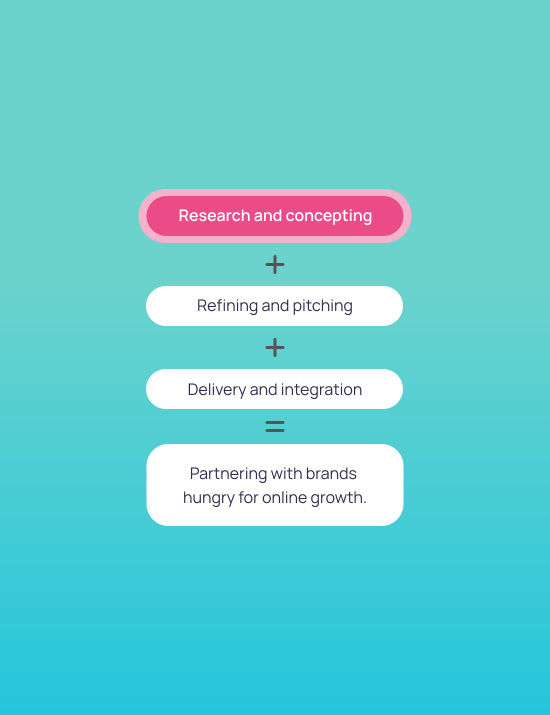
What do we need, why do we need it?
By diving into your customer profile, industry, competition, and live work samples we’re able to develop a deep understanding of what is truly required to achieve your commercial outcomes. The general rule is that more time is needed to get an end product that says less and delivers more.
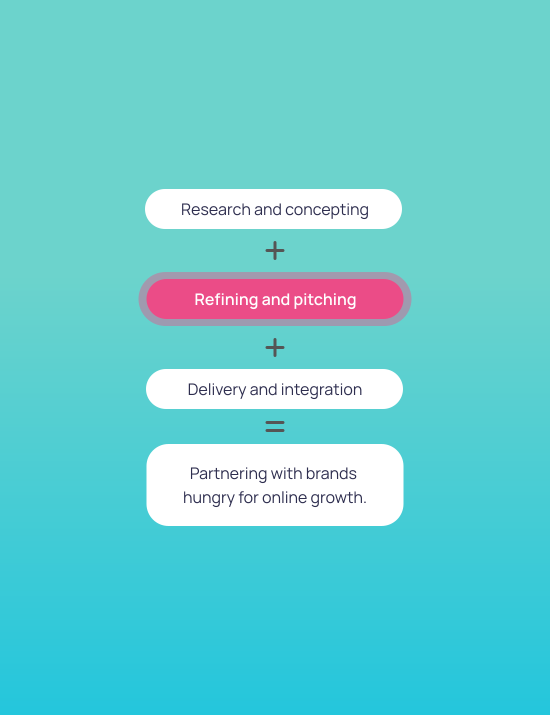
Achieving consensus with your vision
Once the creative team have finished a conceptual framework, we then work with you to refine that into a finished product and pitch the detail behind the simplicity to you with as much conviction as humanly possible; if you aren’t sure that we’ve turned every stone in search of the right creative for your brief, how can you approve the work to go to market?
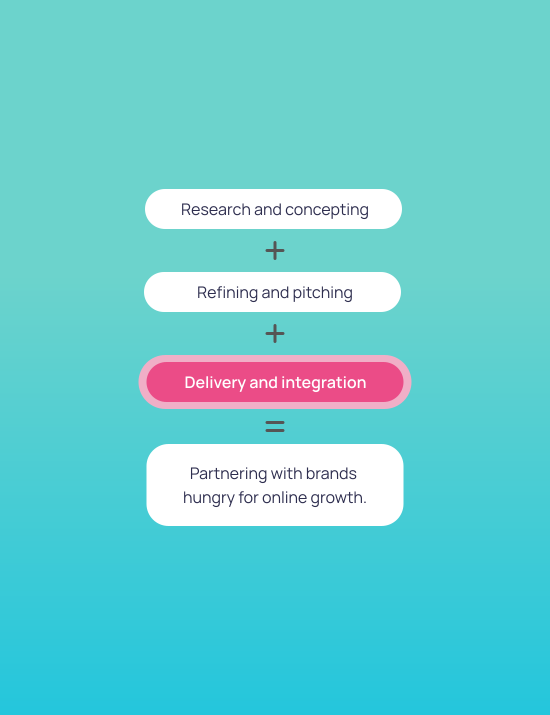
Building your designs into customer-facing comms
Once we all agree on the finished creative, we then deliver the creative into its use. This could be a website that we’ll hand off to our dev team, a set of creative ads that we’ll hand off to our performance marketing team or an automation workflow that we’ll finalise with the client service team.
Partnering With Brands Hungry for Growth









The astute approach is to match your UX brief or process to the scale of the commercial outcomes you are trying to achieve.
For example, a small website that is serving a local community group will drive a smaller amount of revenue or business outcomes than a centralised app
Great UX equates to great product engagement rates which equates to great profitability. Without engagement, use and conversion, digital products serve limited commercial value to an organisation. With quality UX, these same products often become game-changing profit centres for that very same organisation.
Bad UX and UI design can mean significant underperformance in your digital products. Where design and product decisions are made without consideration for usability, functionality and engagement the resultant use and engagement with your digital product is almost always sub-par. This is why it is critical to engage with effective UX and UI design from day one.
UX/UI design is the process of mapping the natural processes that humans (users) take when interacting with digital products, and matching those processes to business requirements for the organisation. These are then merged to create ‘user flows’ which become screens and workflows for digital products. User Experience (UX) and User Interface (UI) design is generally utilised in app development, website development and any product or service where the psychology of the audience is critical to the success or failure of a product or service.
A project normally has two to three rounds of reviews built into the scope of works pending size and scale of the project. The review process should include a briefing from Talk to you, as well as background on the decisions have been made to arrive at the design that’s being presented to you. We then normally take your feedback and apply it across the work and resupply a revised version to ensure our visions are matching to your requirements.
A good digital designer knows how to prioritise the different elements in a design to achieve the outcomes that the business needs, rather than the look or feel that the designer may want. This is a very different skill set to, say, a traditional graphic designer or an untrained creative or marketer that is generally working on a look and feel basis.
Digital design is important because it prioritises business performance over ‘look and feel’. Don’t get us wrong, good digital design still looks incredible, but it is always informed, first and foremost, by user and business needs. It means the designs you get at the end of the project perform much stronger from a commercial perspective once they get out into the wild.
Digital design is the process of mapping what users are doing online (commonly referred to as user experience design) and benchmarking it against what your business is trying to achieve (for example, usage of an app or form, clicking on an ad etc). Once this is complete the learnings are then applied in a formulaic way to create the most relevant designs possible for the project.
Best Served Together
Want best in class results? Harness the power of a holistic digital marketing solution with these other services.








Book Your Free Consultation
Book your free consultation and start your growth journey today